Most people I know don't really look forward to winter. I don't imagine a majority really does. But now that it's mid-September, and we're under a heat advisory here in western Kentucky, maybe we should do another informal poll.
Right now, my phone says it's 90 degrees, and it's not even noon. We're looking at a high in the upper 90s. Yeah, winter doesn't sound too bad right now.
So since we're thinking about winter, let's cut open some fruit and look for silverware.
(I know, but bear with me.)
How Persimmon Seeds Predict the Winter
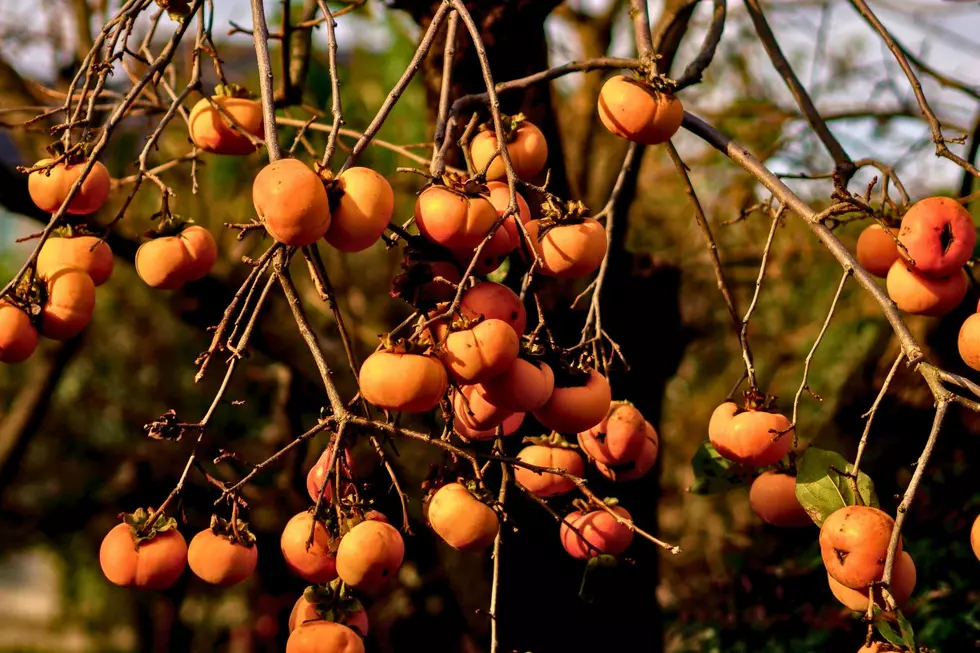
According to an old piece of weather folklore familiar throughout Kentucky and other parts of the South, the seeds of a persimmon can predict the upcoming winter, depending on the shape you find when you split a seed open.
In eastern Kentucky and throughout Appalachia and even the Ozarks, the tradition calls for removing a seed from a locally grown American persimmon and carefully splitting it lengthwise. Inside, you'll find something resembling a spoon, fork, or knife—and, according to folklore, there's your forecast.
Spoon, Fork or Knife? What Each Persimmon Seed Means
The Farmers' Almanac tells us that a spoon shape indicates a snowy winter. The "spoon" in question looks more like a shovel. As in, you better have one ready; you're gonna need it.

If you see the shape of a fork, we're in for a mild winter. The fork's tines symbolize “abundance” and a more forgiving season.
When you see a knife, though, you'd better keep a parka handy. It's supposed to represent bitter, "cutting" winds. A knife indicates ice more than it does snow.
Read More: Woolly Worm Winter Prediction for Southern Indiana
How to Try the Persimmon Seed Winter Forecast
Now, if you conduct this experiment, the Almanac suggests using 10 seeds. And apparently, even persimmons believe in a decent sample size. Each seed represents one week in a 10-week winter forecast, in the order you open them. So the first seed forecasts the first week, the second forecasts the second, and so on.
No, there's no science behind any of this. But science isn't really the point.
Meteorologists absolutely earn their keep, but thanks to sources like the Farmers' Almanac and the Frymire forecast—not to mention nature's contributions by way of persimmon seeds and woolly worms—Americana earns its keep, too.
LOOK: 50 cozy towns to visit this winter
Gallery Credit: Laura Ratliff
Shocking TV Twists That Fans Actually Predicted
More From WBKR-FM
![The Persimmon: A Weather Predicting Fruit? [PHOTO]](http://townsquare.media/site/76/files/2016/10/14563516_10209766107202600_159511775799353523_n.jpg?w=980&q=75)