
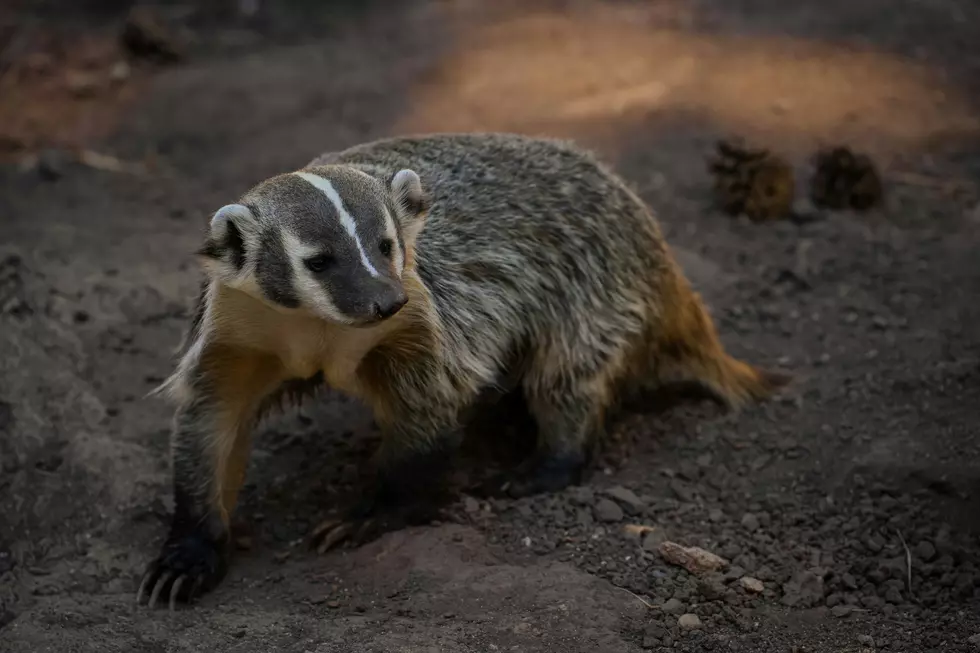
American Badgers May Be Making Their Way Back to Kentucky
When I visit the Owensboro Museum of Science & History and check out the taxidermy mounts representing creatures found in our region, the presence of a badger always mystifies me. I've lived here all my life and have never seen—or even heard mention of—a badger in this area.
Well, apparently that badger knows something I don't.
According to the Kentucky Department of Fish & Wildlife Resources, recent records of American badgers in Daviess and Warren counties may indicate the species is expanding its range into portions of Kentucky. And that certainly got my attention. Badgers are extremely uncommon in the Commonwealth, and Kentucky isn't generally considered part of their modern range.
But here's where it gets even more interesting. Badgers aren't exactly strangers to Kentucky. Evidence shows they were here thousands of years ago, and now wildlife officials are trying to determine what these more recent appearances might mean.
Are Badgers Moving Into Kentucky?
Sure. Why not? The nine-banded armadillo has shown up in spades in the Commonwealth, and before that relatively recent development, I never saw hide nor hair (it's sparse, but it's there) of one outside of interstate highway shoulders in West Texas. Yes, you guessed it, I've never seen a live armadillo, only roadkill.
I wish better outcomes for the American badger if it is, indeed, expanding its range into the Commonwealth. And I wish great success for the trail cameras Kentucky wildlife officials use to track them and other rarely seen mammals like the Allegheny woodrat and the Eastern spotted skunk.
Where Do American Badgers Normally Live?
Well, for starters, Wisconsin. As a college sports devotee, I had to throw that in, but that's just one state. Let's also include Illinois, the Great Plains states, the Pacific Coast, and the Southwest. The American badger's range stretches across much of the western and central United States and into Mexico, which helps explain why seeing one in Kentucky would be such an unusual occurrence.
And maybe Daviess County isn't such a strange place for one to turn up. Kentucky Fish & Wildlife says that, within the Commonwealth, American badgers would likely prefer open prairie and rolling farmland.
Badgers Lived in Kentucky Thousands of Years Ago
Boy, talk about returning home after a long journey. I can see the American badger now..."Oh, THAT'S new! And where that Kohl's is? That was my favorite prairie."
In all seriousness, physical proof of their ancient presence in the Bluegrass was discovered in Great Saltpetre Cave in Rockcastle County, where the fossilized lower jaw of a juvenile badger was unearthed. In fact, it was only the second known badger fossil occurrence in Kentucky.
And now we've come full circle. I now understand why the American badger has earned its place among the river otter, the bobcat, and all the other creatures represented in the Owensboro Museum's exhibit.
16 Of the Most Dangerous Creatures in Kentucky
Gallery Credit: Dave Spencer
WOW: 19 Exotic-Looking Animals Surprisingly Found in America
Gallery Credit: Stephen Lenz
More From WBKR-FM